News & Insights
Practical insights from private GPs, checked and kept up to date, plus dated posts from our archive. New writing goes out first in The Beat.
Latest
Nothing new here in the last few months
New insights and practice news go out first in The Beat, a short monthly email for private GPs. Past issues are all online.
Insights
Practical views from private GPs on running a practice. We check these against current guidance and show when each was last updated.
- Systems
Picking an electronic health record system
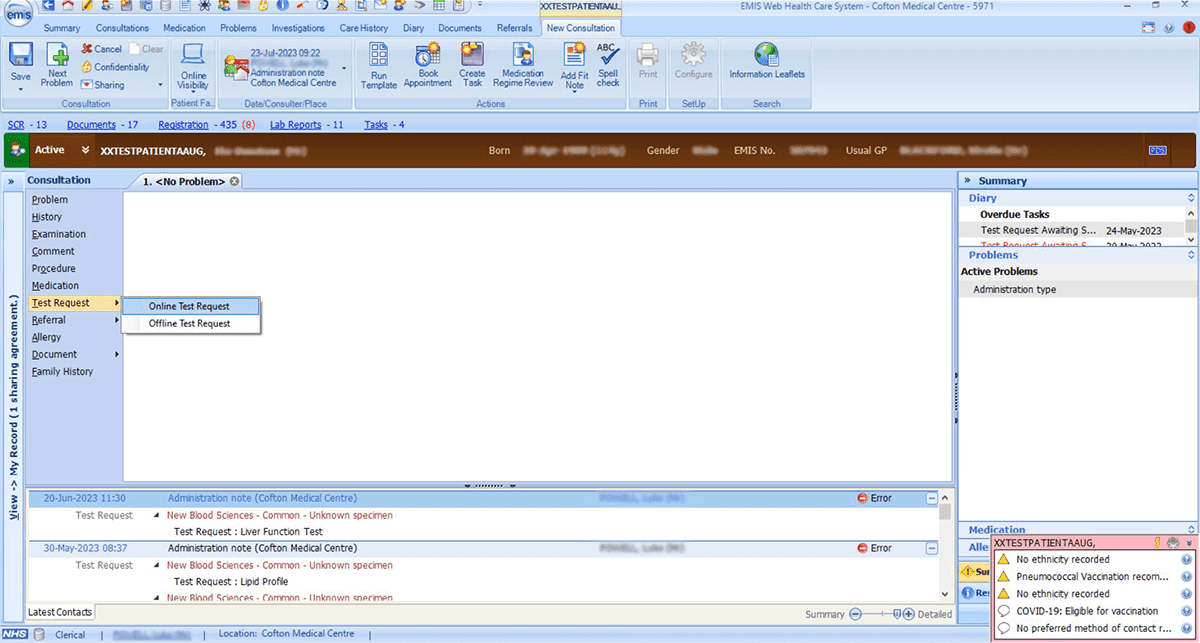
Many private clinic systems are customer-management tools with a notes field. Most private GP patients also use the NHS, so pick a system built around the clinical record that helps you share information with their NHS GP.
- Getting started

Starting off in private practice: I'm a GP, but what next?
To work for an existing private clinic you mainly need your GMC licence, a route to appraisal and revalidation, and indemnity that covers private work. To run your own service in England you also need CQC registration, which takes a few months but is manageable with preparation.
- Tips

How should private GPs send prescriptions to patients?
Private GPs cannot use the NHS Electronic Prescription Service. For patients who are not in the room, a private electronic prescribing service is usually the quickest safe option. Schedule 2 and 3 controlled drugs still need a paper FP10PCD in England.
- Tips

How do private GPs store their consultation notes?
Most private GPs keep their notes in a cloud-hosted electronic record. Paper is allowed, but whatever you use must be secure, accurate, complete and contemporaneous, with a written retention policy and a way to export records if you change system.
- Tips

Does private medical insurance (PMI) cover private GPs' fees?
Usually not. Most UK private GP consultations are self-funded, and PMI policies tend to include the insurer's own remote GP service rather than paying an independent GP. A few policies reimburse the patient for private GP visits up to a yearly limit, and some international insurers pay directly against a guarantee of payment.
- Insights

View from a private GP: How should independent GPs communicate with NHS GPs?
With the patient's consent, send the NHS GP a short note after each private consultation, covering problems, relevant findings and medicines, and be clear about who is responsible for what. Secure electronic transfer into the practice's workflow over MESH is the most reliable route, with encrypted email or the patient as fallbacks.
- Private vs NHS

Why are private GPs so expensive compared to NHS primary care?
NHS practices are paid a fixed yearly sum for every registered patient, whether or not they attend, so the cost is spread across the whole list like a subscription. A private GP has no guaranteed income and carries the same fixed costs, so each fee has to cover the appointment and the risk of quiet periods.
- Systems
Choosing a private GP record system: what we look for
No single record system is right for every private GP. We look for coded notes, safe prescribing, a reliable route to the NHS GP, strong reporting and a clean way out, then test two or three systems with real workflows.
- Insights

Online booking: time-saving genius or more hassle than it's worth?
We think online booking is worth it for almost every private GP service. It saves reception time, patients prefer it and it lets you take payment upfront. The downsides, mainly patients booking the wrong appointment, can be managed with clear appointment types.
- Tips

Three tips for optimising private practice billing
Take payment when the patient books, explain and collect any extra charges before they leave, and ask insured patients to pay and claim back unless their insurer has given a guarantee of payment.
- Tips

Three tips for gathering and actioning patient feedback
Use a short online survey, send it the day after the appointment and show patients what you changed as a result. It improves your service and gives you the evidence your appraisal and the CQC both expect.
- CQC

Five tips for passing your CQC inspection
The CQC has no fixed inspection cycle. It assesses private GP services by risk, under five key questions, so the way to pass is to keep evidence of feedback, team learning, training, significant events and audit up to date all year.
From the archive
Dated posts, kept for reference. Details may have changed since they were written.
- On the ground

Life on the ground #4: A patient is verbally abusing my front-desk staff. How do I handle this?
A patient charged for a missed appointment verbally abuses reception staff, disrupting consultations. Act and risk losing a valued family, or do nothing and appear to tolerate abuse of staff?
- On the ground

Life on the ground #3: Why are we seeing this patient?
A patient arrives 25 minutes late, refuses other slots and abuses staff. An off-duty clinician steps in, until the patient overhears an administrator's insult. What more could the practice have done?
- On the ground

Life on the ground #2: Why are we seeing this patient?
A real story from private general practice: a late, abusive patient, an off-duty clinician who steps in, and a remark overheard from the back office. What would you do?
- On the ground

Life on the ground #1: Who pays for vomit damage?
A patient vomits in a shared area of the building before a non-urgent appointment. The practice pays for professional cleaning and asks the patient to cover it. The patient refuses and complains. What should happen?
Get new posts in The Beat
One short email a month with new articles, industry news, the latest technology and job opportunities in private general practice.