Resources
Practical guides for private GPs, from CQC registration and indemnity to pricing, systems and working with the NHS. Choose a topic to start.


Subscribe to The Beat
Our 1-minute monthly newsletter for private GPs, direct to your inbox.
Popular guides
Good places to start, from what private general practice involves to whether you need to register with the CQC.
What is private general practice?
Private general practice is GP care that the NHS does not pay for: the patient, their employer or sometimes an insurer pays, usually per appointment or through a membership. The doctor follows the same GMC standards as in the NHS, and the service is regulated separately, by the CQC in England. Patients almost always keep their NHS GP and NHS entitlement, and private GPs work without most NHS systems such as EPS and e-Referrals.
Why become a private GP?
Most GPs who move into private practice do it for flexibility: longer appointments, more say over how they run consultations and manage patients’ concerns, and more control over their working week. The trade-offs are real. You take on regulation, indemnity and business risk, and private income does not build your NHS pension. Most GPs start by adding private sessions alongside NHS work.
Do I need to be registered with the CQC as a private GP?
In England, if you carry on a regulated activity such as treating disease, disorder or injury as a private GP, the legal entity providing the service must be registered with the CQC. There is a narrow exemption for doctors seeing patients face to face in a consulting room while linked to an NHS or other registered provider, and practising privileges can bring you under a hospital’s registration. Remote consultations, employing staff or running your own clinic usually mean you must register.
How much should I charge as a private GP?
Published private GP fees in the UK run from about £55 to £70 for a 15-minute video appointment, and from about £75 to £150 for 15 to 30 minutes face to face, with hour-long appointments at £240 or more. Set your own fee by working out your costs per clinic hour and how many appointments you will realistically fill, then check it against local competitors. If you work under practising privileges, the clinic usually sets the price.
Do I need additional/different indemnity to practice as a private GP?
Yes. In England the state-backed Clinical Negligence Scheme for General Practice (CNSGP) has covered NHS GP work since April 2019, but it does not cover private work. Wales’s scheme has the same limit, and Scotland and Northern Ireland have different arrangements. Before you see any private patient, tell your medical defence organisation or insurer exactly what private work you will do and get written confirmation that it is covered.
What are the restrictions on seeing private patients in NHS practices?
An NHS GP practice (the GMS or PMS contractor) must not charge its own registered patients for any treatment or prescription, whether the treatment is part of the NHS contract or not, apart from a short list of exceptions such as certain travel vaccines and reports. It can see patients registered elsewhere privately, but only outside its contracted NHS hours and not in premises NHS England pays for. It also cannot advertise private services through the channels it uses for NHS services.
Free tools
Check your CQC readiness or plan your launch. Free, with no sign-up.
CQC inspection readiness scorecard for private GPs
Answer 22 questions across safe, effective, caring, responsive and well-led to see how ready your evidence is for a CQC assessment, with next steps for your weakest areas. England only. Free, no sign-up.
Private GP Launch Pack
A 90-day launch checklist, a start-up budget worksheet and a map of who regulates what in each UK nation. Free, no sign-up.
Systems & suppliers
Clinical systems, pathology labs, compliance tools and the other services private GPs rely on, and what each one does.
Compliance
Tools that help your practice stay compliant and evidence it to the CQC.
Clinical supplies
Pharmacy wholesalers, laboratories and the suppliers that keep clinics running.
Patient Records & Clinical Systems
Electronic health records, prescribing and clinician-to-clinician communication.
Business operations
Billing, accounting, marketing and customer service for a private practice.


Latest news
Keep up to date with private general practice: industry news, practical tips and system updates.
- Regulation
Private GP news round-up: October 2026
What changed for UK private GPs from July to early October 2026: lower DBS fees, new employment law duties, the CQC's rebuild and new rules for event healthcare, a training reminder, and HIW's warning on unregistered providers.
- Systems
Picking an electronic health record system
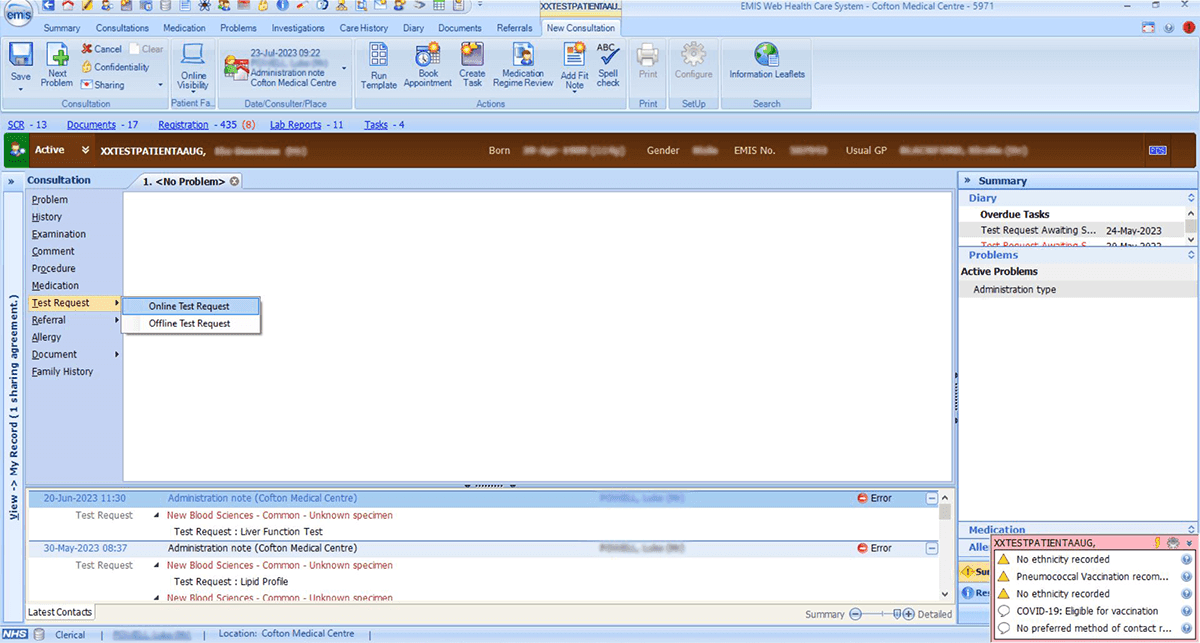
What system should you use to manage your practice?
- Getting started

Starting off in private practice – I’m a GP…but what next!?
Are you a trained GP considered work as a private GP? We explore what you need to get started.